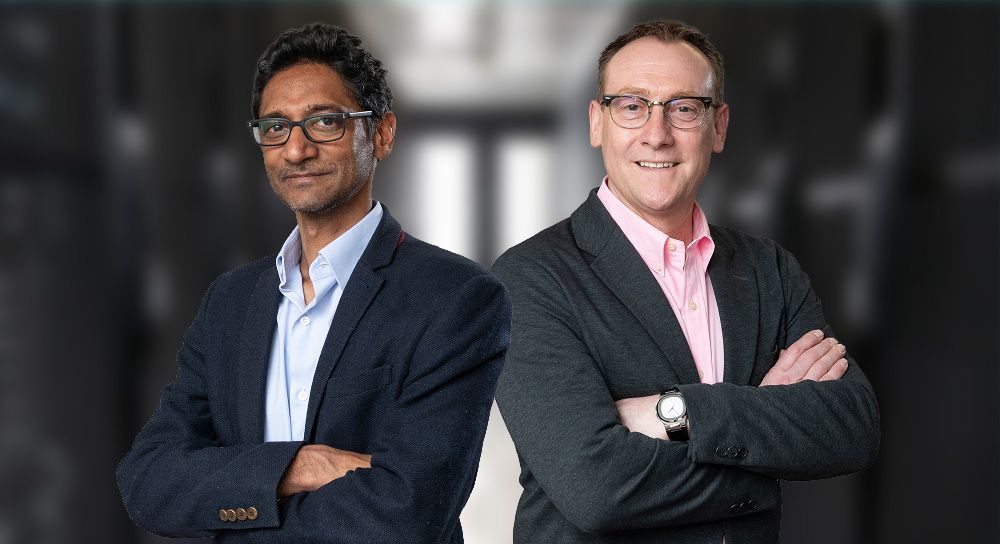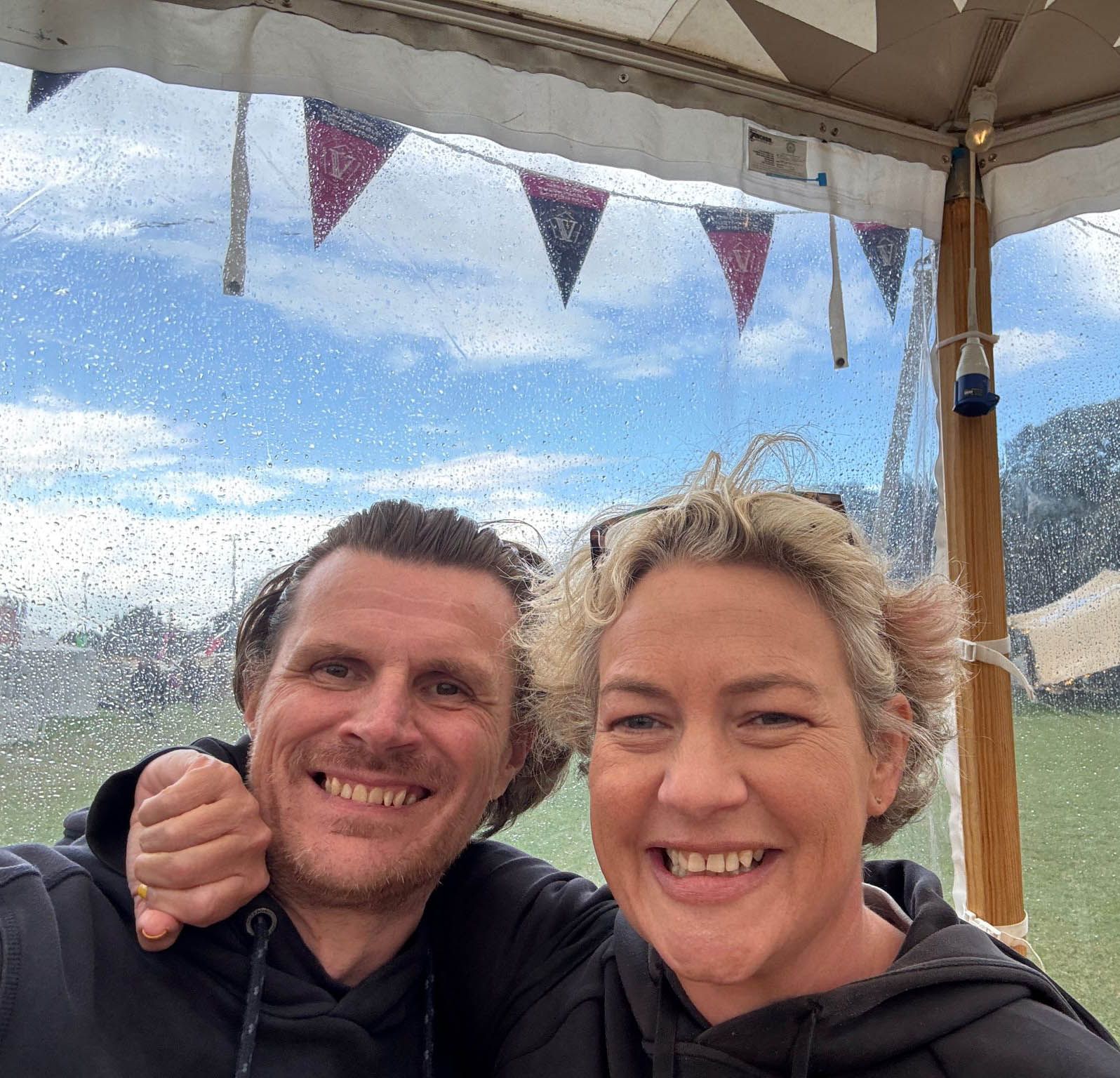
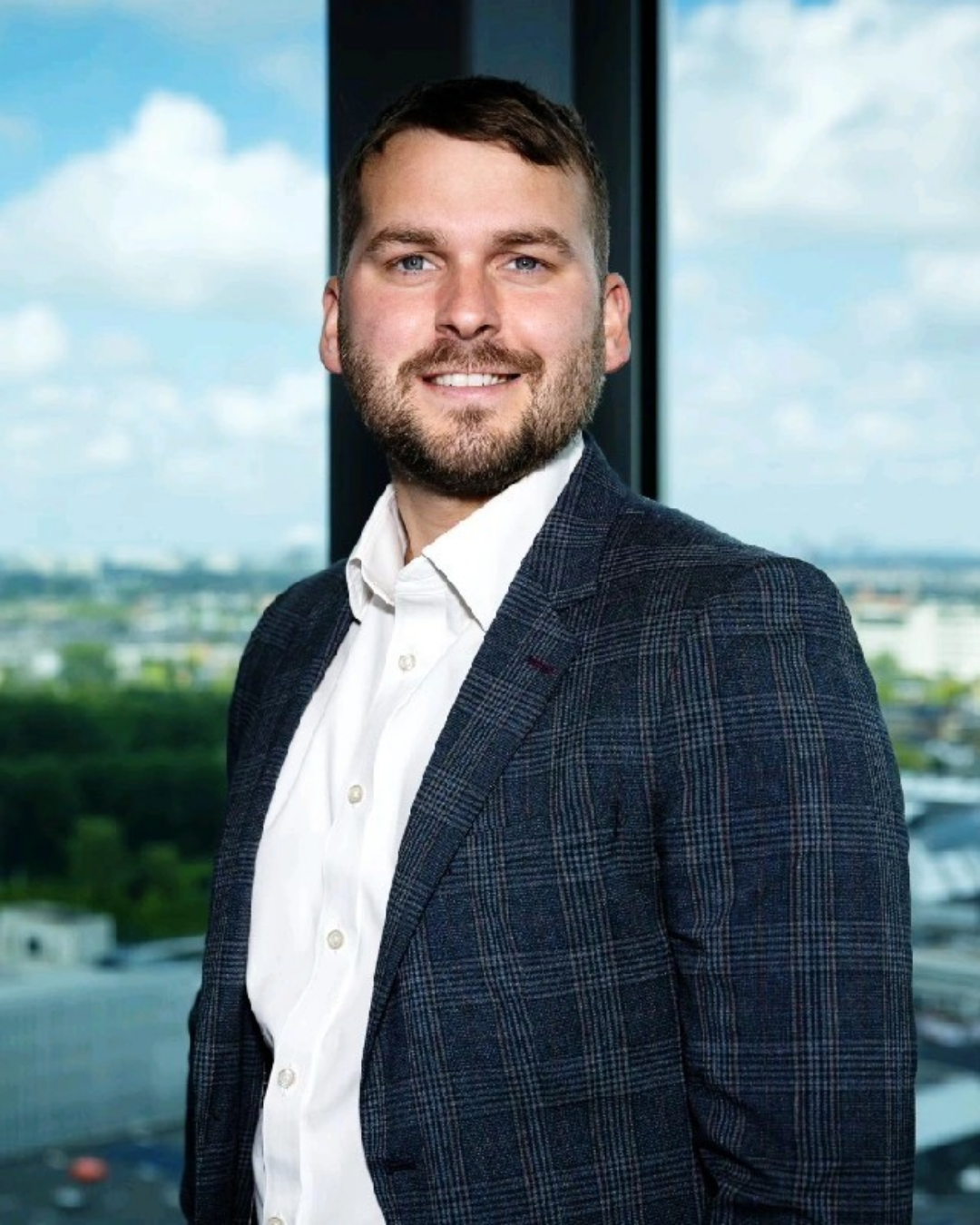
Michael Watts has spent his entire career looking at problems with clinical precision. As a practising NHS doctor turned health tech founder, he's trained to assess, diagnose, and prescribe a solution. He knows how to read the signals that others might miss and form a clear picture.
It's what he does for a living.
But applying that same clinical eye to his own business was a completely different challenge.
A Pivot That Just Made Sense
Michael still practises medicine alongside running his business, Blüm Health. In a lot of ways, it’s quite an unusual combination. But in others, it just makes sense.
The company was built from the inside of the healthcare system by someone who understands its realities, frustrations, and genuine potential for change. It’s a perspective that shapes everything from the products Michael and his co-founder, James Lomas, build to the clients they choose to work with.
Blüm Health sits at an intersection that not many companies occupy. The data and AI consultancy builds digital health solutions for clients ranging from UK government departments down to solo entrepreneurs who've won grant funding. But what really sets them apart from other health tech companies is their full-service model:
They don't just build products. They also regulate and distribute them. In a sector where navigating compliance and distribution can be as hard as building the product itself, that end-to-end capability is a meaningful differentiator for Michael and James.
Six years in, the business had found its footing. A UK base, growing work in the US, Canada, and the Middle East, and a client list that reflected the breadth of today’s health tech landscape.
Michael and James’ ambitions, though, had always been for more. Specifically, for growth that felt a lot less like grinding and a lot more like momentum.
"We were experiencing linear growth when we wanted exponential," Michael says. "We needed to get enough breathing room to actually think about a long-term strategy."
It’s a feeling many founders know well. The sense of working just hard enough to keep things moving forward, without quite getting to the point of understanding how to move differently. Blüm was by no means in a crisis mode. The business was growing, and clients were happy. What was missing was the space needed to be intentional about what came next.
It was that gap that prompted Michael and James to reach out to The Grafter.
An Outside View Looking In
The co-founders joined The Grafter's Grow Raise Exit programme in the fall of 2025, working with the team over a six-month tenure. The first step was a business valuation, which was, by their account, a genuinely unfamiliar experience.
Why? Because founders who are still heavily involved in delivery, like Michael and James were, rarely get the opportunity to look at their own business from an outside perspective. For founder-led businesses, there’s almost always something more pressing. Clients to serve, projects to move forward, problems to solve. The reality is, the daily rhythm of running a small business doesn't leave much room for the kind of honest and structural assessment that a business valuation provides. And between Blüm and his NHS commitments, Michael had been running at full stretch for years. So carving out that type of time hadn't really been possible on his own.
"We very rarely get to stop and look at the business from the outside in," Michael explained. "That, in itself, was incredibly useful."
After getting their valuation, a few clear priorities emerged. Strategy was the obvious first step. Things like how to break past linear growth and scale exponentially, how to make better decisions about where to focus, how to stop making reactive decisions and start making more intentional ones.
Founder risk was another big eye-opener for Michael and James. Like a lot of other small businesses, Blüm carried a large degree of founder-dependency that needed to be addressed if the co-founders were ever going to sell the company. If the business were to grow and eventually become a sellable asset, they needed to get out of the day-to-day operations so the business could operate without them involved.
After going through our Business Diagnostic, Michael and James were able to better understand what an exit might look like for Blüm, what it would actually require, and where the business needed to be if it was going to get there.
An Honest Diagnosis
Michael and James have never lacked self-awareness. It's one of the things that makes them great founders (and in Michael’s case, a great doctor, as well). So when the GRE programme started surfacing some harder truths about where Blüm was as a business, they leaned into it rather than shy away.
The biggest insight they gained wasn't a new strategy or a roadmap to exit. It was something more foundational about where their time was going. Blüm was growing well up until this point. But the challenge was that as the business scaled, the two were still spending most of their time inside the engine rather than steering the ship. Every hour spent in delivery was an hour not spent on the longer-term thinking that the next phase of growth was going to require.
It's a transition every scaling business has to make at some point. From founders who do all the work, taking on every role within the business, to founders who lead the work. The Grafter helped Michael and James realise that the most important next move wasn't strategic planning. It was building the operational team that would give them the headspace to plan strategically in the first place.
"The only negative part of the programme, really, was that we weren't able to engage with it as much as we wanted to. Because we were still very much heading the delivery ourselves,” Michael explains. “But that was kind of the point of it."
Once they had that level of clarity, everything else followed more naturally. The next obvious question shifted from, "What's our long-term strategy?" to "What do we need to build right now so we can actually think about long-term strategy?" And that's a question that’s much easier to answer.
"Ironically, one of the biggest learning points was that we needed more operational people to take on delivery so we could focus more on long-term vision."
Exit Moving From Abstract to Reality
Previously, Michael and James’ idea of selling the business only existed in that vague space many founders resonate with. It’s nothing but a thought. Occasionally entertained, but always far off in the future. Some abstract event. Never really anything more.
"For a long time, exit was always part of our long-term vision for the company. We knew it was something we wanted eventually,” Michael said. “We just hadn't done the work needed to make it feel real until now."
What going through the GRE programme did was give the idea of exit some actual structure. Figures attached to goals. A clearer sense of what an exit might look like, what it would require, and where the team still needed to take the business to get there. Exit shifted from something distant and abstract into something with more of a shape. Something that Michael and James could actually envision more clearly.
"It's made it more tangible. Starting to put figures to goals, thinking about how we're going to get there, with what services and products."
While exit isn't on the immediate horizon for Blüm, it's no longer just a thought for the two co-founders. It's become an actual direction with an actionable plan behind it.
Where Things Stand Currently
Over the course of the six months of working together, roughly £500k of business was directly connected to work with partners across The Grafter's community. It’s the kind of direct commercial benefit that comes from being in a network where founders actively look to help and connect with one another.
A few months after finishing the GRE programme, Blüm is generating more leads than ever. The team is starting and seeing projects completely through without Michael or James being pulled straight back into delivery. And the focus on building real operational capacity and infrastructure is beginning to show up in how the business functions day to day.
Aside from an increase in revenue, the team’s productivity is through the roof. Engineering output and the number of projects being serviced have both increased substantially.
Perhaps most unexpectedly, though, is the fact that several newer clients have come directly through The Grafter community. It’s a byproduct of being in a room with other founders who are looking to work with people they already have reason to trust. While conversations don’t always translate into commercial work, when they do, they tend to move more quickly because of the existing level of trust, something cold outreach can rarely match.
"We've certainly come out better off than we went in, which is the main thing."
While the operational build is still underway and an exit is still a direction rather than an actual date, what's changed is that Michael and James now have a clearer picture of what they’re building towards, a growing understanding of what needs to happen to get there, and a community of people who are invested in their success.
And for a founder trained to diagnose like Michael, having that level of clarity is worth everything.
Blüm Health joined The Grafter's Grow Raise Exit programme at a point of real ambition, looking for the structure, strategy, and outside perspective to match. If that sounds like you, it might be worth having a conversation with us.