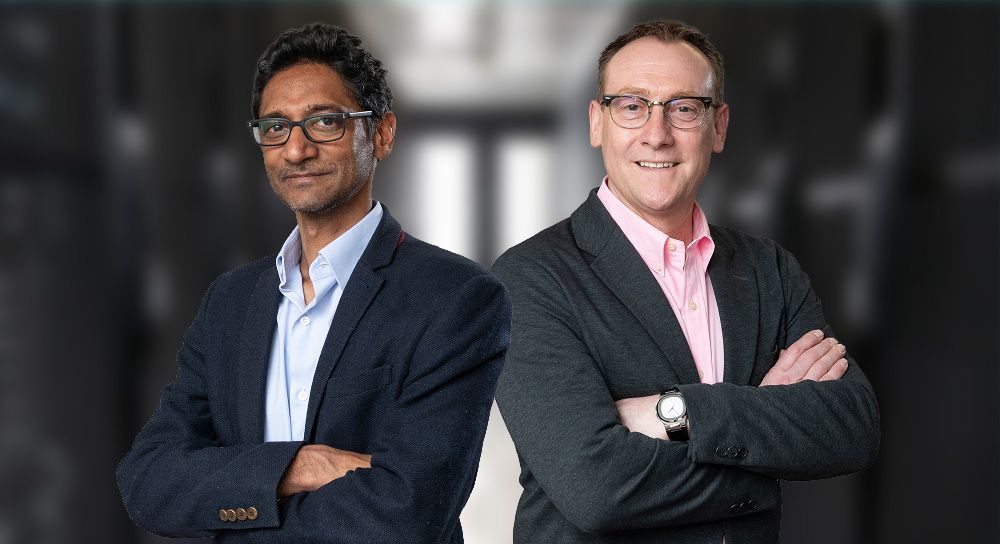

For years, SARD JV led the way in medical revalidation and job planning for NHS Trusts, delivering complex but essential solutions. What led them to pivot into Software with a Service (SwaS)? They were pretty good at selling them as well, a decade of good growth highlighted their pedigree. Phil Bottle, one of the co-founders and Managing Director, fondly remembers the success of getting to 50 Trusts and the journey it took to get there.
But the thing with success is it can be circumstantial and it breeds competition. Circumstances change and competition inevitably leads to a price war and race to the bottom. Systems are now selected on two main criteria, features and cost, ironically rarely on outcome or additional benefits.
Phil remembers the personal wake-up call he had:
“Initially we were charging £250/seat – well justified for the solution that added real value and met a specific legal requirement. We were solving a problem and our customers loved us. This led to garnering a great footprint across NHS trusts. But then fast forward 10 years and I vividly remember the day we lost a bid with a great prospect. We were very competitively priced at £10/seat, but the winning solution was less than half this! What is worse is the client didn’t want the rival bid, but procurement parameters left them with no choice. This was a real wake-up call for me personally. The NHS were struggling to justify budgets, and similar solutions were pulling the price lever to get traction.”
Phil understood that trouble was brewing and it was becoming more difficult to compete, especially when your foundation was about providing great service as well as great systems. Support was simply not valued. This concern of Phil’s was really driven home when it came time to renew one of their bigger clients. A client that loved not only the solution, but the support and the company as a whole.
“We then got a message from one of our clients saying that although they loved the system, their procurement team had forced them down the path of re-tendering.The wanted to ensure they were getting the best deal. We went through the tender process and it shaved 50% of the annual value off the contract. Which we had to do just to keep it. We knew the competition would play the price card and there was no mention of support.”
But that wasn’t the hardest part, although the contract was won, the client had major concerns that lower costs would mean they would lose the support they relied heavily on.
“I then got a letter from them saying – we need you to put in writing that the quality of service will not drop even though we’re paying you half the money. This set alarm bells off. The client valued the service they got, but the process of procurement didn’t.”
For the previous few years the business was growing in customers, but not in revenue. For every new customer they won, the price dropped and renewals got discounted. So despite getting more NHS customers on board, having more work to do to support these customers, they weren’t actually bringing in any more revenue.
“And that was the real pivotal moment for me personally where I realised we are in a completely dying marketplace here. It won’t die quickly, it will die horribly slowly. I started to search for an answer”
This answer appeared serendipitously whilst listening to an audiobook during his morning commute:
“I was listening to $100 Million Offers by Alex Hormozi who was talking about reframing. And it was at that moment it all fell into place. I remember thinking – can it really be that simple? We just need to reframe how we offer what we do to provide the most value for the client and for us. We needed to provide outcomes.”
Phil’s co-founder Kevin had known Rachel Murphy (CEO of The Grafter) for a while, and so introduced Phil to see if there were ways that they could help out. Rachel talks about this initial engagement:
“We started with the Business Diagnostic – it’s a bit like business therapy, but it helps everyone get on the same page and does a pretty detailed analysis of the business. That gave everyone a good temperature gauge on the existing business, and really helped focus us on where the effort needed to be spent.”
The Grafter often use the Business Diagnostic at the start of many of our engagements. It really helps analyse what’s working well, and what needs attention in the business. We also find it’s quite cathartic for folks to get stuff out in the open. With the Business Diagnostic conducted, it gave everyone a clear picture and gave us a distinct roadmap to focus on the product offerings.
“It was clear that SARD JV has a lot of great expertise in healthcare, specifically workforce optimisation, so we started developing the idea with them of a consultancy offering and moving the business into more SwaS (Software-with-a-Service).” – Rachel explains.
Phil was resolute about what needed to be done, he was aware in some cases and completely naive (his own words not ours) in others about the challenges that would be faced – not only in building the service, but evolving the company from the old to the new.
“When I wrote down the new direction on the whiteboard after sprinting from my car and I looked at it, my only concern was convincing people we could deliver it. I knew that, having worked in the NHS myself and being on the other end of big consultancy engagements, the question was – can we convince people as a software company that we actually can deliver this stuff?”.
Now engaged with The Grafter team, the starting point was to break down this new service and see exactly what it would take to deliver and to convince people this was the right choice. The Grafter started this by looking at the operating model – what does the service actually look like, and how SARD JV could transition their existing business to support this new business model. This fleshed out the details of what was actually needed to take this new SwaS offering to market, and how the business could support it. The reality was that most of the people and skills needed were already in the business, so it was just a case of getting everyone bought in.
The next step was actually taking this to market, and that required an almost fundamental shift in the sales approach. Phil explains:
“When we started, we were vomiting out features left, right and center. We will impress you with the amount of buttons that the thing we built has got. One of the biggest things I’ve been thinking about for a while was how do we sell something without actually talking about the thing that we’re selling? And that is expressly how we won the Countess of Chester – we never showed them the system. I spent an hour asking them questions and we had a really good conversation. Believe it or not, I didn’t really speak, just threw in a question every now and again. So that was the realisation that it could work because we had got loads of interest.”
Winning that one deal was huge for the SARD JV team, not just in getting a new customer, but proving that this new SwaS offering was actually something that people wanted, and more importantly it opened access to new budgets within the NHS that were otherwise locked away from a pure SaaS offering. This was a pivotal moment for the confidence of the SARD JV team.
What has this done for the SARD JV business as a whole? Phil explains:
“Consider that it took us over 10 years to get to £1.3 million revenue, which stagnated for a while, to this year where we brought in an additional £500k. We would have had to have sold at least 30 systems for that.”
Phil is pragmatic about the root causes of this turnaround and new found success. He talks about how invaluable having people involved who had ‘been there and done that’ was for him and the business.
“I think probably the biggest benefit to The Grafters involvement in all this, is not being on my own. It’s a big deal because you’re really naive at the beginning. I’ve run a business, I’m a Managing Director of a business. Does that make me experienced in all things business? Of course not! But having people that give you a little bit of a pep talk, say – just keep going, you’ll be all right, as well as some needed reality checks to keep your course true – hugely helpful.”
This is not the end of the story, with new contracts coming in which offer real value in this outcome based approach, our connection with SARD JV continues and we look forward to helping elevate them even further.